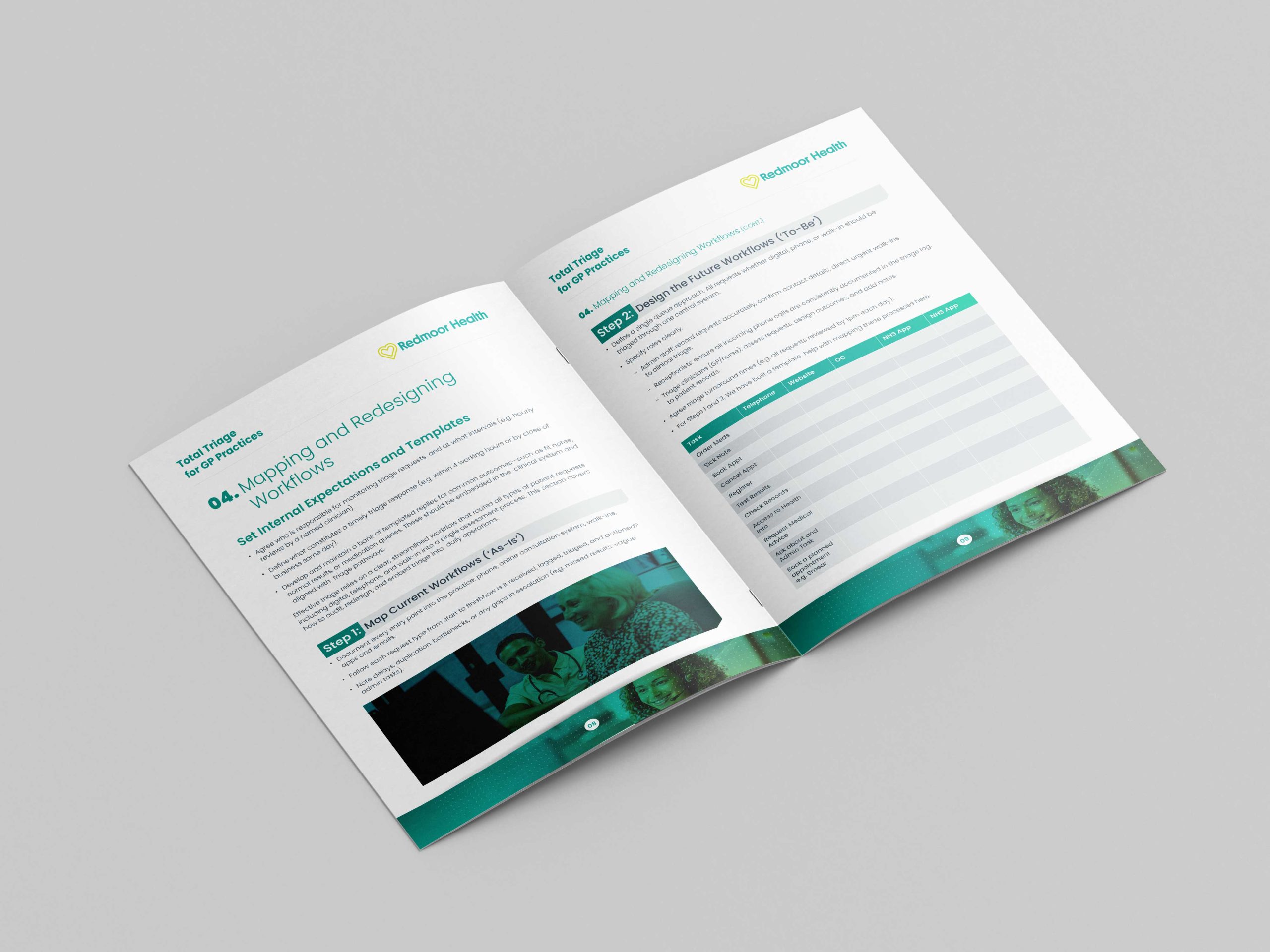
Quality Improvement in Primary Care
Quality Improvement is central to how Redmoor works. It shapes how services are reviewed, how problems are understood, and how change is tested, refined and sustained.
In primary care, better outcomes rarely come from effort alone. They come from improving the systems behind access, workflow, communication, capacity and patient journeys.
Why it matters
General practice is under constant pressure. Demand shifts, teams are stretched, and expectations keep rising. In that environment, change needs to be structured. Without that, improvement becomes reactive, fragmented and hard to sustain.
Redmoor helps practices, PCNs and systems take a more disciplined approach to improvement by focusing on what is happening now, what needs to change, and how progress will be measured.
How Redmoor approaches improvement
Our approach starts with a clear view of the current position, then moves into practical testing and implementation. We typically focus on:
Defining the aim
Understanding the current process
Identifying pressure points, delay and duplication
Using data to measure progress over time
Testing changes on a manageable scale
Refining what works and embedding it into day-to-day practice
This keeps improvement practical. The aim is not to create activity for its own sake, but to make services work better for the teams delivering care and the patients using them.
The PDSA cycle
We use the Plan, Do, Study, Act cycle to test and refine change in a structured way.
Rather than rolling out major change all at once, we test ideas in practice, review the impact, adjust where needed and build from what works. This reduces risk, supports team engagement and helps improvement stick.
Turning insight into change
Redmoor combines improvement thinking with hands-on delivery. Depending on the programme, that may include:
- process mapping
- workflow review
- prioritisation and action planning
- variation analysis
- root cause analysis
- structured testing of change
- support for implementation and follow-through
The focus is always practical. Improvement has to work in the reality of live primary care, not just in theory.
Where we apply this approach
This methodology runs across the full range of Redmoor’s transformation work, including:
- patient access and care navigation
- telephony and online journeys
- websites and digital front doors
- communication workflows
- demand and capacity
- planned care and call and recall
- prevention pathways
- neighbourhood and INT working
- CAIP and wider contractual improvement
- operational workflow redesign
While each programme is different, the method stays consistent: understand the system, test change properly, and measure whether it is making a real difference.
Building confidence within teams
Good improvement work should not end with a report. It should leave teams with better ways of working and more confidence to continue improving. That is why Redmoor’s approach also focuses on helping teams to:
- make better use of data
- review and improve processes more confidently
- strengthen local leadership for change
- embed improvement into daily practice
Supporting national improvement priorities
This approach also aligns closely with national primary care improvement programmes, including Practice Level Support, where hands-on facilitation, measurement for improvement, process mapping and capability building are central to successful delivery.